

Commentaries
October 19, 2026
Bank of Canada Business Outlook Survey and Canadian Survey of Consumer Expectations (2026 Q3)
The Bank of Canada’s Business Outlook Survey (BOS) was conducted between August 6 and September 2, 2026. Roughly three-quarters of the interviews took place before trade talks between Canada and the U.S. collapsed.


October 16, 2026
Canadian Existing Home Sales (September 2026)
Canadian existing home sales fell 2.3% month-on-month (m/m) in September, dragged down by B.C. (-5.7% m/m and Ontario (-3.1% m/m). However, declines were registered across most jurisdictions. Only Alberta (+1.1% m/m) and some parts of the Atlantic recorded a gain.

October 09, 2026
Canadian Employment (September 2026)
Canada’s economy lost 68k jobs in September (-0.3% m/m), well below consensus expectations for a 10k gain. The decline was split between full-time and (-35k) and part-time work (-33k). Private-sector employment rose by 24k, while losses were concentrated in the public sector.


September 16, 2026
Productivity Mega Deduction = Mega Growth?
Prime Minister Carney announced an expanded immediate expensing framework aimed at kickstarting major projects and capital spending in Canada at the Investment Summit. The policy expands on the existing Productivity Super Deduction announced in Budget 2025. It allows firms to deduct 100% of the depreciation of capital assets in the first year of operation on a broader set of equipment classes. This lowers the tax burden in the current year by reducing taxable income.

September 02, 2026
Bank of Canada Interest Rate Announcement (September 2, 2026)
The Bank of Canada left its policy rate unchanged at 2.25%, in line with expectations. The opening statement noted that the continuing conflict in the Middle East as well as breakdown in trade talks between Canada and the U.S. have kept uncertainty elevated.

August 27, 2026
FDI flows remain moderate, while foreign flows into Canadian debt securities hit a record.
Canada’s balance of international payments release has two main components: the current account (trade in goods and services, income flows and transfers) and the financial account (portfolio and direct investment flows). This note focuses on the financial account.

June 22, 2026
Read the Fine Print: The Bank of Canada’s Mortgage Warning Is About Refinancing, Not Renewal
The household chapter of the Bank of Canada's latest Financial Stability Report generated considerable attention with estimates suggesting that nearly 10% of Toronto-area borrowers renewing in 2027 could be unable to refinance their mortgage. Given the questions we have received, we think it is worth revisiting what the Bank's estimate measures and what it does not.


June 03, 2026
Canada's Economy: Two Quarters Down, But Not Out
Canadian GDP has now contracted for two consecutive quarters, and the “R-word” is making the rounds again. A primer we wrote a few years ago remains a useful reminder that defining a recession in Canada isn’t as straightforward as the popular “two consecutive quarters of negative GDP” rule of thumb.

March 10, 2026
Global Financial Conditions Tighten in Face of Middle East Conflict
Financial markets have whipsawed as hope emerged for the fighting between the U.S., Israel and Iran to cease. Financial conditions had tightened since the start of U.S. and Israeli airstrikes on Iran on February 28th. The prospect of the conflict continuing to simmer, or reigniting again, risks a steeper tightening in financial conditions that, together with a large energy supply shock, could result in weaker economic growth and rising inflation – often referred to as stagflation.

March 02, 2026
Escalating Middle East Tensions Jolt Oil Markets
Oil markets have reacted swiftly to the latest escalation in Middle East tensions. At the time of writing, WTI crude prices have surged more than 5% to $70.50/bbl, marking the highest level since mid-June. Brent prices have moved up by a similar amount and are currently sitting at over $77/bbl. Currently, the Brent-WTI spread sits at $6.5 – about twice as high as its historical average – but still below the spread reached in 2022 following Russia’s invasion of Ukraine.

February 25, 2026
Capital and Repair Expenditure Survey (2026)
Statistics Canada released the results of its latest 2026 survey of non-residential capital and repair expenditures (a.k.a., the CAPEX survey). This year's survey offers a clearer view of investment plans compared to last year's, as the sampling period now better captures the trade headwinds and pressures affecting businesses and government over the last year.

February 20, 2026
U.S. Supreme Court Rules Against Broad-Based Country Specific Tariffs Under IEEPA
On February 20th, 2026, the U.S. Supreme Court announced that it would be upholding the lower courts rulings, which found the administration's use of tariffs under the International Emergency Economic Powers Act (IEEPA) to be unlawful.

February 05, 2026
Same, but Less: Prime Minister Carney Announces New EV Rebate and Auto Sector Strategy
On February 5th, Prime Minister Carney and Industry Minister Melanie Joly announced a revised strategy aimed at decarbonizing the transportation sector and supporting Canada's fledgling EV manufacturing industry. Many of the measures announced were similar to what was in place under Trudeau, but simply less stringent and/or less generous versions of those previous policies.

April 02, 2025
U.S. Liberation Day Binds The World To High Tariffs
The U.S. administration announced broad reciprocal tariffs today, targeting all trading partners, and not just the countries that run large trade surpluses with the U.S. The tariffs will be implemented under the International Emergency Economic Powers Act (IEEPA) of 1977.

March 27, 2025
U.S. Imposes 25% Auto Tariffs
President Trump announced that on April 3rd, the U.S. will place 25% tariffs on all imported passenger cars and light trucks. However, imported vehicles from Canada and Mexico that are compliant with the USMCA will face the 25% tariff only on the value of content produced outside of the U.S.
February 12, 2025
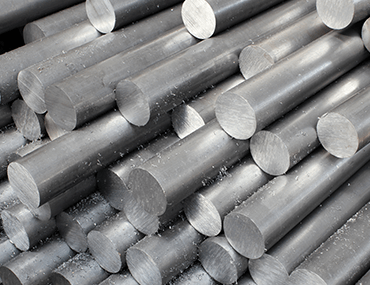
Update on U.S. Steel and Aluminum Tariffs
The White House has announced the restoration of Section 232 Tariffs on Steel and Aluminum that were originally imposed in 2018. The rate on steel will return to the 25% implemented in 2018, while the rate on aluminum will rise to 25%, from 10% previously.