Generative Artificial Intelligence, Productivity, and the Future of Work:
Why AI Is More Likely to Change Jobs Than Eliminate Them
Rannella Billy-Ochieng’, Senior Economist | rannella.billyochieng'@td.com
Thomas Feltmate, Director & Senior Economist | 416-944-5730
Date Published: October 1, 2026
Highlights
- Rapid advances in generative artificial intelligence (AI) have intensified concerns that automation could replace many workers. However, a large-scale displacement requires AI to perform tasks reliably, operate at a cost that is economically attractive, and be rapidly adopted across firms.
- Those conditions remain a high hurdle. Research suggests that AI’s ability to operate autonomously remains limited and there are many things that challenge economic feasibility and transparency. These barriers will temper the intensity of adoption as businesses consider the benefits of reorienting workflows.
- If the high bar is met, a doomsday AI Job Apocalypse could potentially raise the unemployment rate by as much as 0.7 – 1.4 percentage points by the early 2030s. The impact would be greater should it coincide with a broader economic downturn, when demand and hiring are already weak.
- However, there is little evidence of AI disruption in aggregate employment. The most visible sign of this adjustment is found in occupations mostly exposed to AI. Still, employment growth across these sectors has softened largely through the hiring channel rather than outright layoffs.
Conversations around how generative artificial intelligence (AI) will reshape the future of work have emerged as a common discussion point in both academia and corporate boardrooms. This interest was born from the fact that AI is becoming increasingly capable of completing a wider range of tasks. As these technologies become more capable, worries about the risk of widespread job displacement are also increasing. These concerns merit attention, but they often blur the distinction between capability and labor market outcomes. The ability of AI to perform a task does not necessarily mean it can perform that task autonomously, nor does it imply that firms will choose to automate it. The ultimate impact of AI on employment will depend primarily on three primary factors: technical capability, economic feasibility, and the pace of adoption within firms.
A large-scale AI-driven “job apocalypse” requires several conditions to align simultaneously, and current evidence suggests those conditions have yet to materialize. Research has shown that fully autonomous performance remains limited despite the broad reach of AI’s capabilities. Similarly, while many tasks are technically feasible to automate, far fewer currently appear economically viable once implementation costs, oversight requirements, and operational hurdles are considered. The pace of adoption also matters. Although AI use continues to expand, deployment across firms remains gradual and uneven. The current evidence collectively suggests that AI is more likely to reshape how work is performed rather than eliminate a large numbers of jobs outright. Therefore, the AI job apocalypse remains a risk scenario, not the base case.
This gradual adjustment to workplace dynamics affords us the currency of time to digest and adapt to this changing environment. Businesses will have time to retrain staff and create a strong pipeline of future ready talent. Policymakers will have time to think about safeguards that are needed to support full employment and workers can also be intentional about honing their skills to participate in an AI-enabled world.
Current Exposure of Jobs to AI Technologies
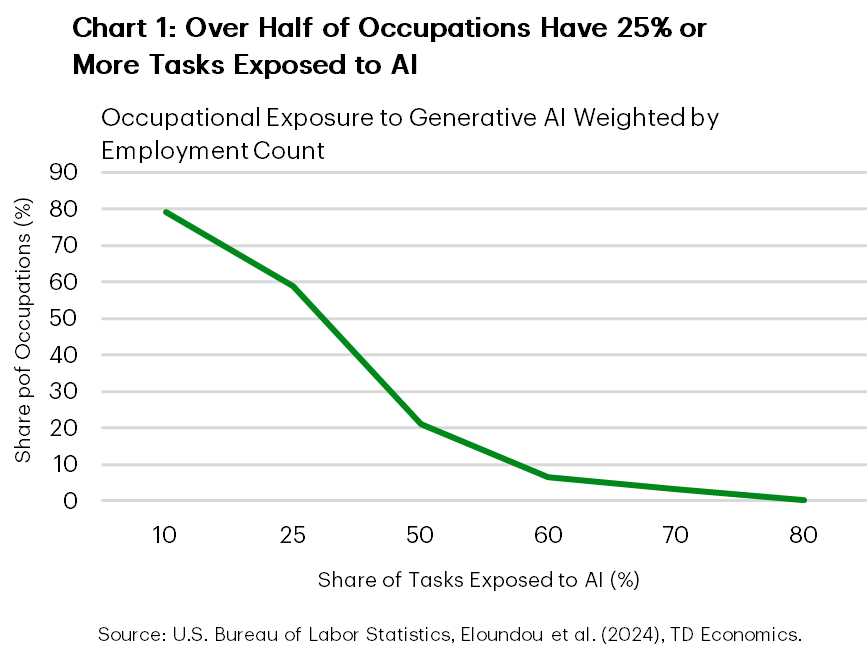
Artificial intelligence has the potential to transform a substantial share of workplace tasks, but task exposure should not be confused with outright job losses. Jobs are collections of tasks that require different skills, levels of judgment, and forms of expertise. Examining work through a task-based lens provides a clearer picture of where AI is most likely to influence work. Research examining more than 18,000 workplace tasks suggests AI already has the potential to affect a meaningful share of day-to-day activities. Across the United States, roughly half of all jobs have at least a quarter of their tasks exposed to AI technologies. (Chart 1).
While this finding underscores the breadth of AI’s reach, exposure is not the same as automation. Exposure indicates that AI may assist, augment, or perform certain tasks. However, it does not imply those tasks will be fully automated, nor that the jobs containing them will disappear. In many cases, AI is more likely to change how work is performed than to replace workers.
The First Condition: Capability and Reliability
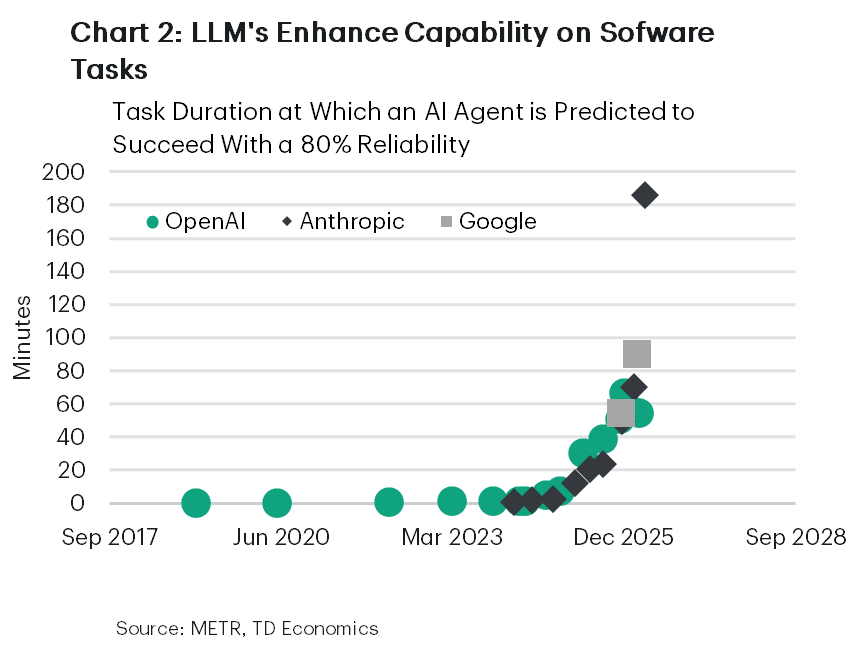
AI must demonstrate a high degree of capability and reliability for widespread worker displacement to occur. To replace humans on a largescale, AI must be able to perform tasks accurately, consistently and with minimal oversight. Data from the Model Evaluation and Threat Research (METR) project shows that leading AI models are becoming increasingly effective at solving software engineering problems that require prolonged reasoning (Chart 2). Progress has been especially pronounced in software development because outputs can be evaluated objectively and the feedback cycles are rapid. However, success in coding does not necessarily fully translate across the broader economy. Many workplace activities involve tacit knowledge, complex judgment, interpersonal interaction, and environments where performance is difficult to measure.
A broader examination of workplace tasks therefore paints a more measured picture. The key question is not whether AI can assist with a task, but whether it can complete that task autonomously and reliably. Existing research suggests fully autonomous performance remains uncommon. One study estimates that less than 2% of jobs contain more than half of their tasks that could be fully automated using AI combined with existing software tools1. The distinction between exposure and automation remains important. While AI may influence a large share of workplace activities, the share of jobs currently susceptible to extensive automation appears much smaller. As a result, AI’s near-term impact is more likely to reshape work than eliminate large numbers of jobs.
The Second Condition: Full AI Deployment Requires Strong Economic Feasibility
Technical capability alone is insufficient to drive widespread AI induced job loss. Economic competitiveness and transparency are essential for large-scale labor replacement by AI. Studies show that only a small share of occupational tasks appear profitable to automate once implementation costs, oversight requirements, and operational risks are considered. Researchers from MIT compared the cost of deploying AI with the cost of human labor for tasks that could potentially be performed using computer vision systems. While 36% of occupations contained at least one technically exposed task, only 8% contained a task that appeared economically viable to automate at scale2. These findings suggest that technical feasibility does not automatically translate to economic feasibility.
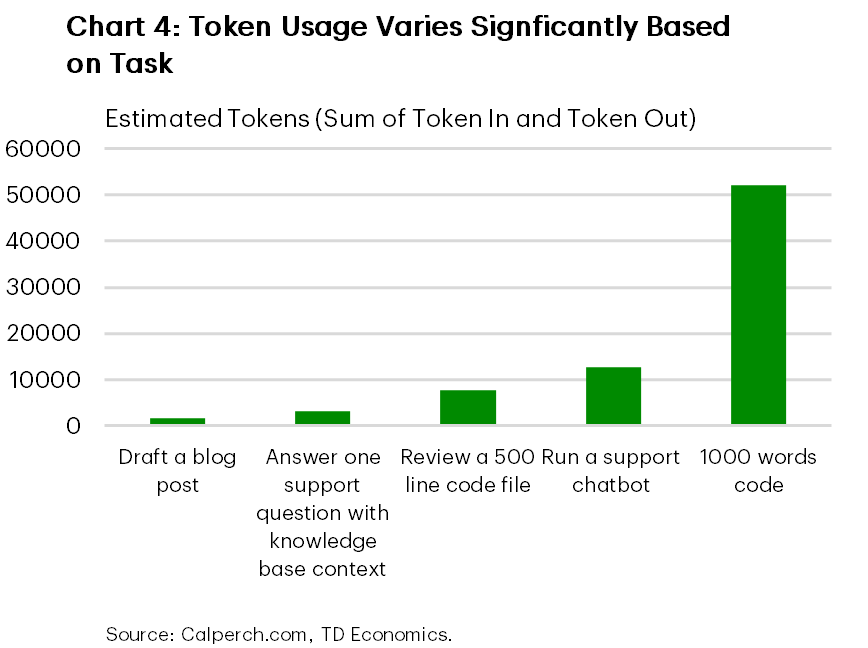
Migrating into a world where AI replaces workers also requires firms to redesign workflows, invest in deployment, and realize meaningful cost savings. Current evidence suggests those conditions are far from universal. From a business perspective, deployment costs extend beyond access to the model itself. Firms also face implementation expenses related to compliance, privacy, cybersecurity, legal requirements, and change management. Among the overall costs, usage (token) costs are especially important because they determine the economics of operating AI at scale. Usage costs vary significantly by task complexity. AI is often cost-effective for routine activities such as summarizing documents, drafting emails, or extracting information, but costs rise materially for tasks requiring extended reasoning, planning, or complex problem solving (Chart 3).3 As businesses lean on technologies more heavily for complex tasks, this has the potential to introduce an economic wild card that lacks transparency and one that may be difficult to forecast.
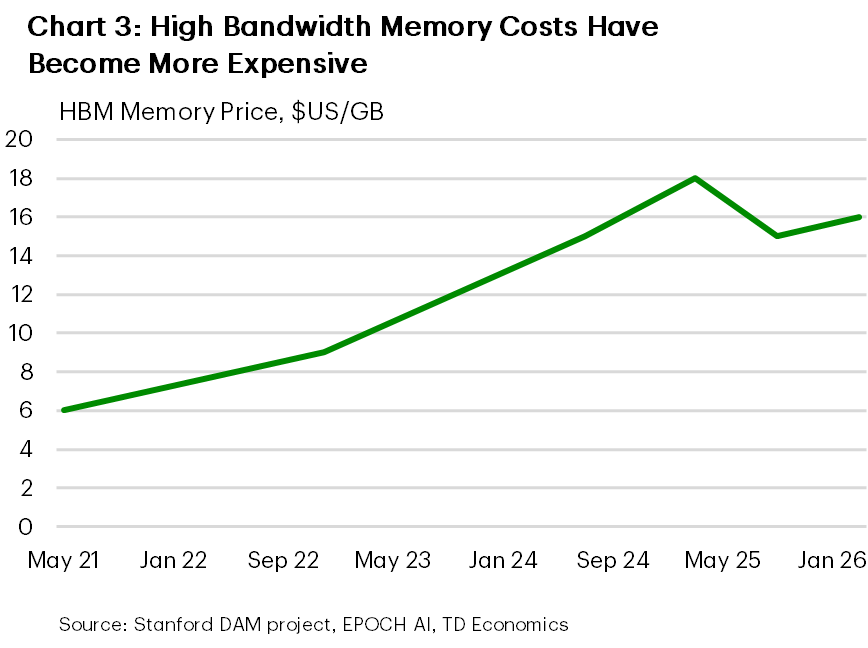
The prices paid by business users are ultimately influenced by the costs incurred by AI providers themselves. These costs are multifaceted and continue to evolve. They include computing infrastructure, data-transfer expenses, model-training costs, and the hardware required to support inference at scale. While some components of this cost structure have declined over time, others have moved in the opposite direction. The costs associated with training models and transporting data have generally fallen, supporting wider adoption. At the same time, rising costs for high-bandwidth memory and certain categories of advanced semiconductor components have created new pressures within the AI value chain (Chart 4). These trends suggest the future cost trajectory of AI remains uncertain. Competitive pressures and efficiency gains continue to lower usage costs, while infrastructure constraints may limit the pace of decline. For now, the economic case for widespread labor replacement remains considerably narrower than the technical case for broader AI adoption.
The Third Condition: The Pace of Adoption Will Shape the Impact
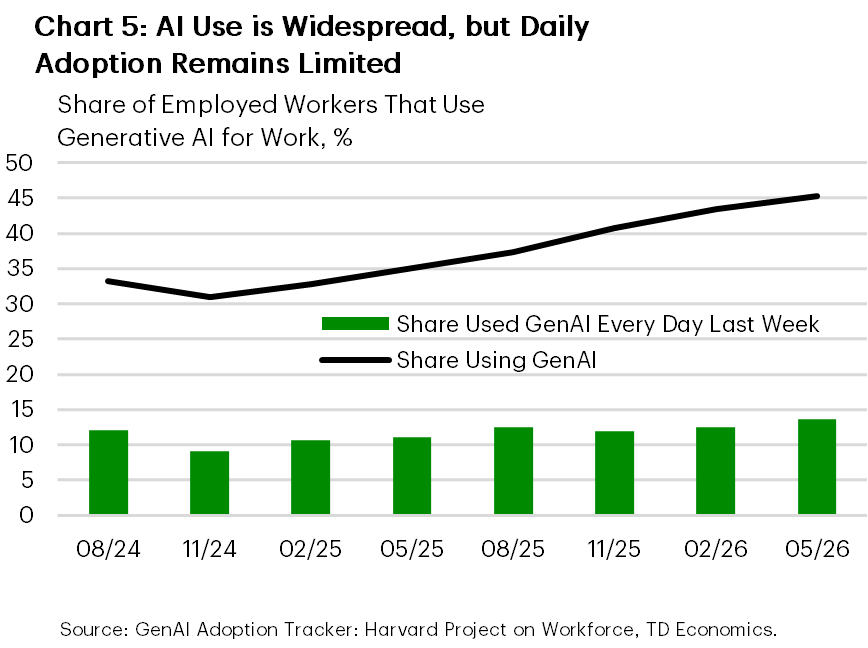
The speed at which AI technologies are deployed at work will shape the labor market outcomes for workers. Rapid AI deployment has the potential to derail workers’ prospects if it occurs at a pace that overwhelms workers’ ability to pivot and adapt. While consumer adoption has progressed rapidly, AI diffusion within firms has progressed at a moderate pace. According to the Business Trends and Outlook Survey (BTOS), around one-fifth of businesses recently reported using AI technologies. And adoption also remains uneven across industries and firm sizes with larger organizations leading deployment efforts.
Worker-level evidence paints a similar picture of growing adoption. Surveys indicate that nearly half of workers have used AI at least once. However, only 13% report using AI daily (Chart 5).4 This distinction is important. Broad awareness and experimentation signal growing interest in AI, but the intensity of usage remains uneven. As a result, AI appears to be supplementing existing workflows rather than serving as a deeply embedded component of day-to-day work across much of the economy.
Current adoption trends point toward a more gradual adjustment process. While AI usage continues to expand, deployment remains uneven and far from universal. Economic constraints, implementation challenges, and differences across industries are likely to influence the speed of adoption. The evidence argues that AI is more likely to be integrated progressively into existing workflows rather than being introduced abruptly as a wholesale replacement for workers.
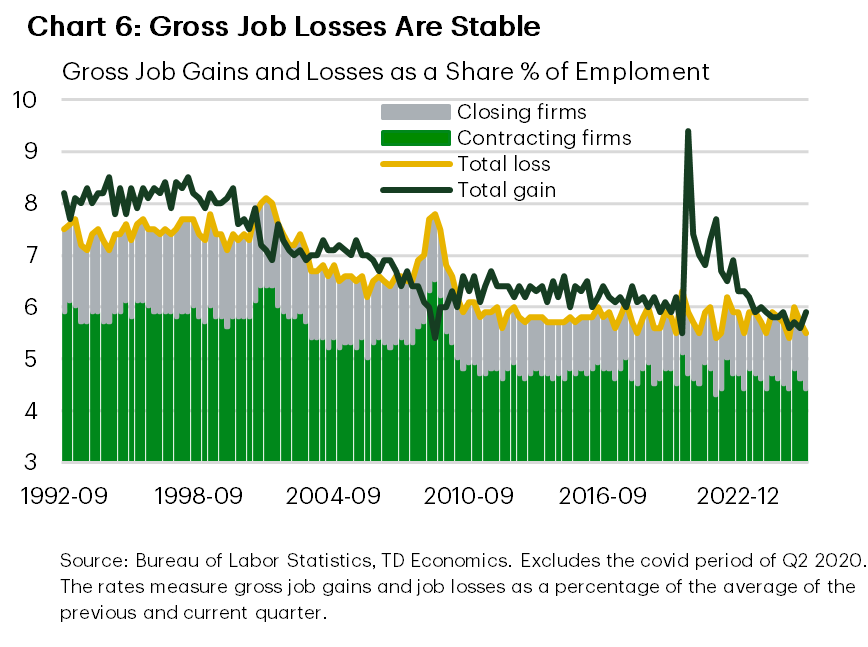
Understanding how the pace of AI adoption orients with typical labor market churns is also important. Labor markets are constantly evolving. Millions of jobs are created and destroyed each year as firms expand, contract, and adopt new technologies. For AI-driven job displacement to emerge on a large scale, adoption would need to occur fast enough to outpace these normal adjustment mechanisms. Historically, labor market disruptions have been associated with major economic shocks or transformational shifts that spread rapidly through the economy. Currently, gross job gains and losses are stable (Chart 6). Keeping a watchful eye on these developments is critical. Since the United States is a frontier country in the global AI adoption, its labor market outcomes will help to reveal what lies around the corner for countries with lower adoption rate.5 In the United States, figures reported by Challenger, Christmas & Gray show that over 20% of planned layoffs have been attributed to AI in 2026.6 While layoffs are an important barometer of change, it is also important to recognize that AI is also spurring job creation, especially in areas that support the AI infrastructure data center build out. These gains more than offset the reported job losses, muting the impact on aggregate employment.
Painting a Picture of an AI Driven Job Apocalypse
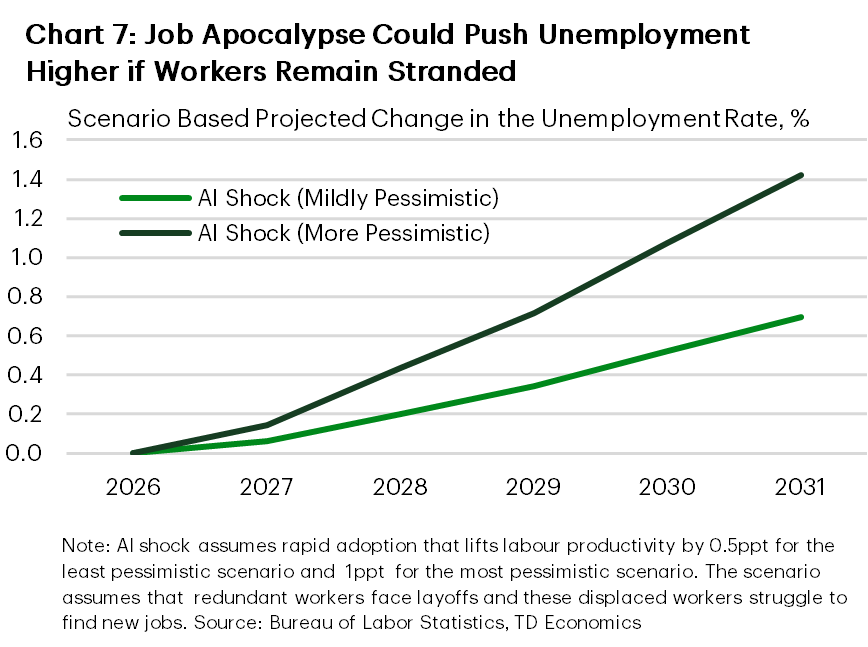 Severe AI-driven job displacement would require the technology to reliably perform workers’ tasks on a large scale, offer firms a compelling economic case for adoption, and diffuse rapidly and broadly across industries. However, even if those conditions are met, the outcome remains highly uncertain. There remains considerable uncertainty around the magnitude of the productivity gains AI could ultimately deliver. Rather than anchor our analysis to a single outcome, we use a range of productivity assumptions to put some guardrails around that uncertainty. The scenarios are informed by productivity estimates from the Federal Reserve that characterized the historical experience of the 1990s IT boom, when technological diffusion produced a meaningful acceleration in productivity growth.7
In our moderate disruption scenario, adoption accelerates faster than the baseline and diffuses broadly across the economy, lifting annual productivity by 0.5 percentage points by 2031. In some functions firms can produce more with fewer workers, creating displacement where skills are no longer aligned with demand. Under the more severe scenario, adoption and diffusion occur even faster, raising annual productivity by a full percentage point above our baseline by 2031. The faster transition also creates greater scope for labor displacement as workers struggle to find new employment. Where skills are poorly matched with emerging opportunities, job searches become more prolonged which leads to longer-lasting labor-market scarring. Across these scenarios, the unemployment rate rises by 0.7 and 1.4 percentage points respectively above our basecase by the early 2030s (Chart 7).
The aggregate numbers only tell part of the story. The disruption is unlikely to be evenly distributed across industries. Sectors with a high concentration of AI-exposed occupations, particularly the data processing and information processing industries, could sit closer to the frontier of adoption and experience greater displacement. Other industries may prove more resilient, particularly where AI complements workers rather than replaces their tasks. And job destruction does not happen in isolation. Technological change can also create jobs as productivity gains flow through to incomes and demand. Workers who remain employed may become more productive and command higher wages, which ultimately translates into greater spending on goods and services. This creates an important offset. While industries with a high concentration of exposed roles may require fewer workers, other parts of the economy can benefit from stronger demand and the new opportunities created by AI adoption. The ultimate employment impact therefore depends not just on the jobs displaced, but also on the economy’s ability to create and absorb workers into new ones.
There are also important risks sitting outside our estimates. These scenarios isolate the AI shock rather than layer on a traditional economic downturn. A recession occurring alongside rapid AI adoption could intensify the adjustment as confidence and demand weaken, producing greater employment losses than under the standalone scenarios. Conversely, adjustments in labor force participation could temper the increase in the unemployment rate. That leaves an unusually wide range of outcomes and reinforces why an AI-driven “job apocalypse” is better understood as a risk scenario than a foregone conclusion.
What We Are Seeing in Employment Today
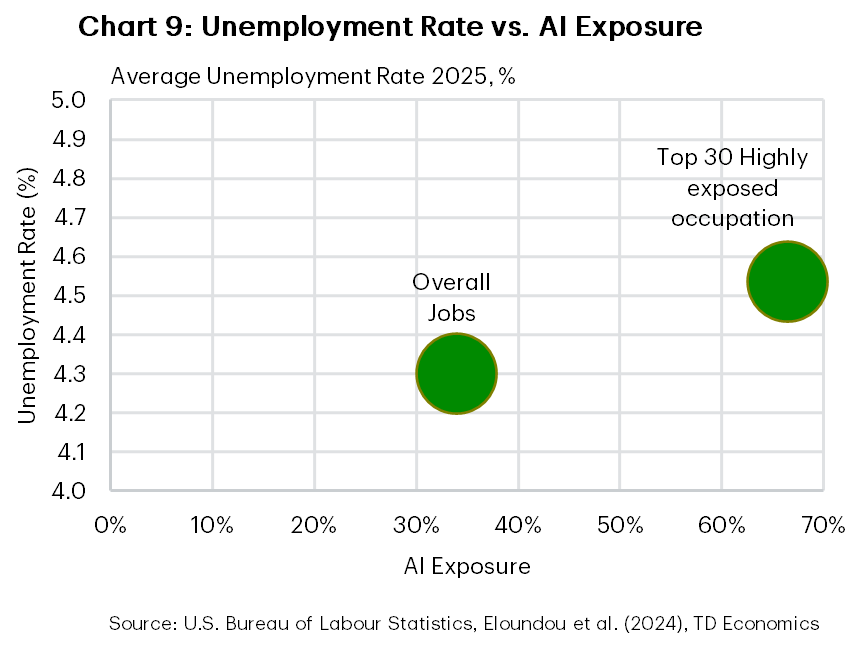
An AI job apocalypse requires a few conditions to simultaneously hold, and since none of these happen, we continue to believe a orderly adjustment to occur alongside broader AI adoption. While this adjustment hasn’t meaningfully altered the aggregate employment dynamic, AI’s early adoption has already had some visible impact on jobs most susceptible to direct substitution. Employment growth in these roles has trended materially lower in recent years (Chart 8).8 And this is an experience that is more pronounced among younger workers. Similarly, the unemployment rate among the topmost highly exposed workers is marginally higher than overall (Chart 9). Despite these trends, aggregate data for layoffs continues to be well contained.
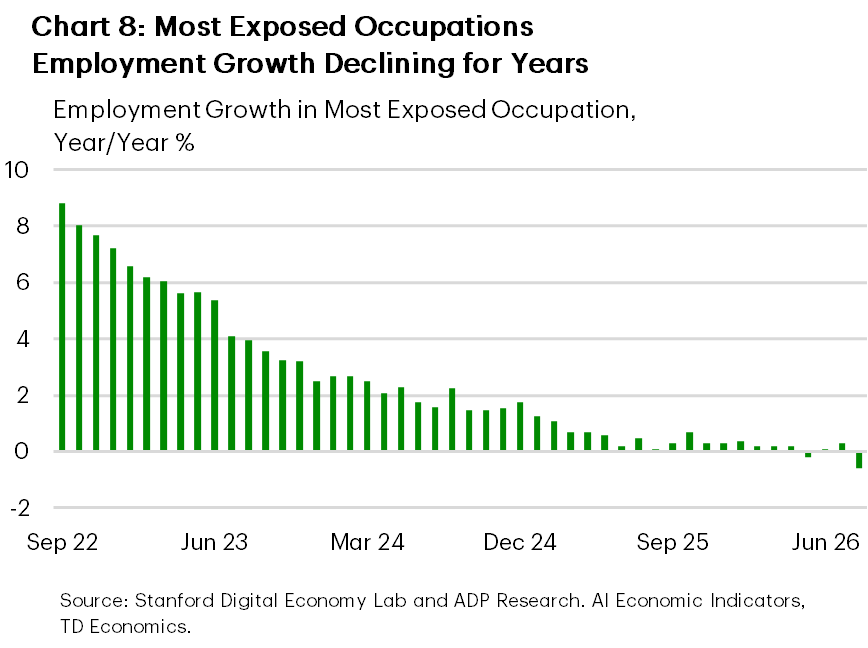
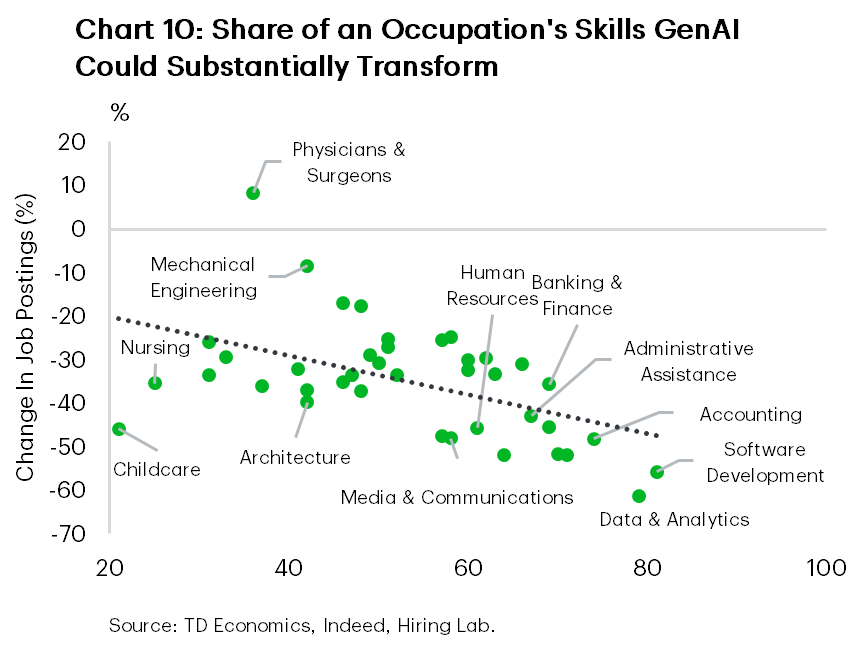
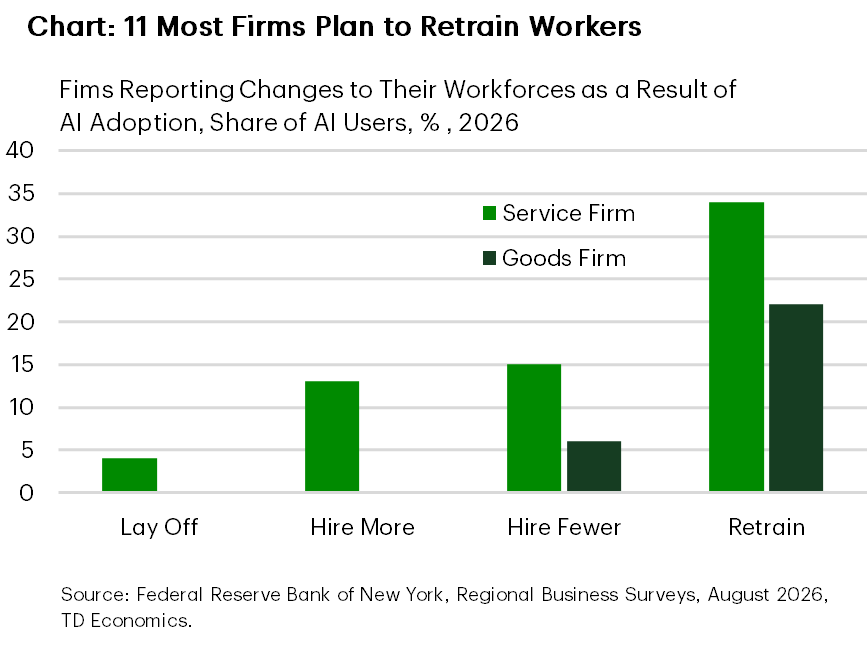
Employers are making adjustment through hiring. Indeed hiring lab data shows that occupations with a larger share of skills that generative AI can transform have shown the most pronounced deceleration in hiring (Chart 10). Therefore, dislocations are showing up through weaker labor demand, rather than outright job losses. This explains why the softness disproportionately affects younger workers entering the labor market. Importantly, taking a closer look at business’s reaction function, many are using this opportunity to retrain workers, rather than outright firing (Chart 11).9
The AI-led transformation will take a long time to soak into the fabric of everyday work. Yet, because it is happening gradually, it has the potential to fall under the radar for years. Current evidence suggests that AI-related displacement remains small relative to the ongoing churn that characterizes a healthy labor market.
A gradual pace of adoption buys time for those who are in the crosshair of change. Policymakers can use this time to develop policy guardrails that would support full participation. Similarly, workers can use this time to get socialized with the changes and bolster their skills for an AI powered workforce.
The Bottom Line
End Notes
- GPT are GPT 2024 June . https://www.science.org/doi/10.1126/science.adj0998
- Maja S. Svanberg, Wensu Li, Martin Fleming, Brian C. Goehring, and Neil C. Thompson, “Beyond AI Exposure: Which Tasks Are Cost-Effective to Automate with Computer Vision?” (working paper, January 19, 2024), SSRN.
- https://calcperch.com/ai-cost-benchmarks/
- GenAI Adoption Tracker: Harvard Project on Workforce, Alex Bick, Adam Blandin. (2026, May). GenAI Adoption
- Alexander Bick, Adam Blandin, David Deming, Nicola Fuchs-Schündeln and Jonas Jessen, “Why Does AI Adoption Differ So Much across Countries?,” St. Louis Fed On the Economy, April 14, 2026.
- Challenger, Gray & Christmas.https://www.challengergray.com/blog/challenger-report-layoffs-fall-hiring-picks-up-ai-leads-for-fifth-straight-month/
- Cascaldi-Garcia, Danilo, and Hyunseung Oh (2024). “Global Implications of Brighter U.S. Productivity Prospects,” FEDS Notes. Washington: Board of Governors of the Federal Reserve System, July 19, 2024, https://doi.org/10.17016/2380-7172.3559.
- Stanford Digital Economy Lab and ADP Research. “AI Economic Indicators: Canaries Dashboard.” Accessed [September 25th, 2026]. https://digitaleconomy.stanford.edu/project/indicators/canaries/
- Jaison R. Abel, Richard Deitz, Natalia Emanuel, and Nick Montalbano, “Businesses Are Using AI to Transform Work, Not Cut Jobs,” Federal Reserve Bank of New York Liberty Street Economics, September 1, 2026, https://libertystreeteconomics.newyorkfed.org/2026/09/businesses-are-using-ai-to-transform-work-not-cut-jobs/.
Disclaimer
This report is provided by TD Economics. It is for informational and educational purposes only as of the date of writing, and may not be appropriate for other purposes. The views and opinions expressed may change at any time based on market or other conditions and may not come to pass. This material is not intended to be relied upon as investment advice or recommendations, does not constitute a solicitation to buy or sell securities and should not be considered specific legal, investment or tax advice. The report does not provide material information about the business and affairs of TD Bank Group and the members of TD Economics are not spokespersons for TD Bank Group with respect to its business and affairs. The information contained in this report has been drawn from sources believed to be reliable, but is not guaranteed to be accurate or complete. This report contains economic analysis and views, including about future economic and financial markets performance. These are based on certain assumptions and other factors, and are subject to inherent risks and uncertainties. The actual outcome may be materially different. The Toronto-Dominion Bank and its affiliates and related entities that comprise the TD Bank Group are not liable for any errors or omissions in the information, analysis or views contained in this report, or for any loss or damage suffered.
Download
Share: